Why Empathy Is the Key to Remote Leadership
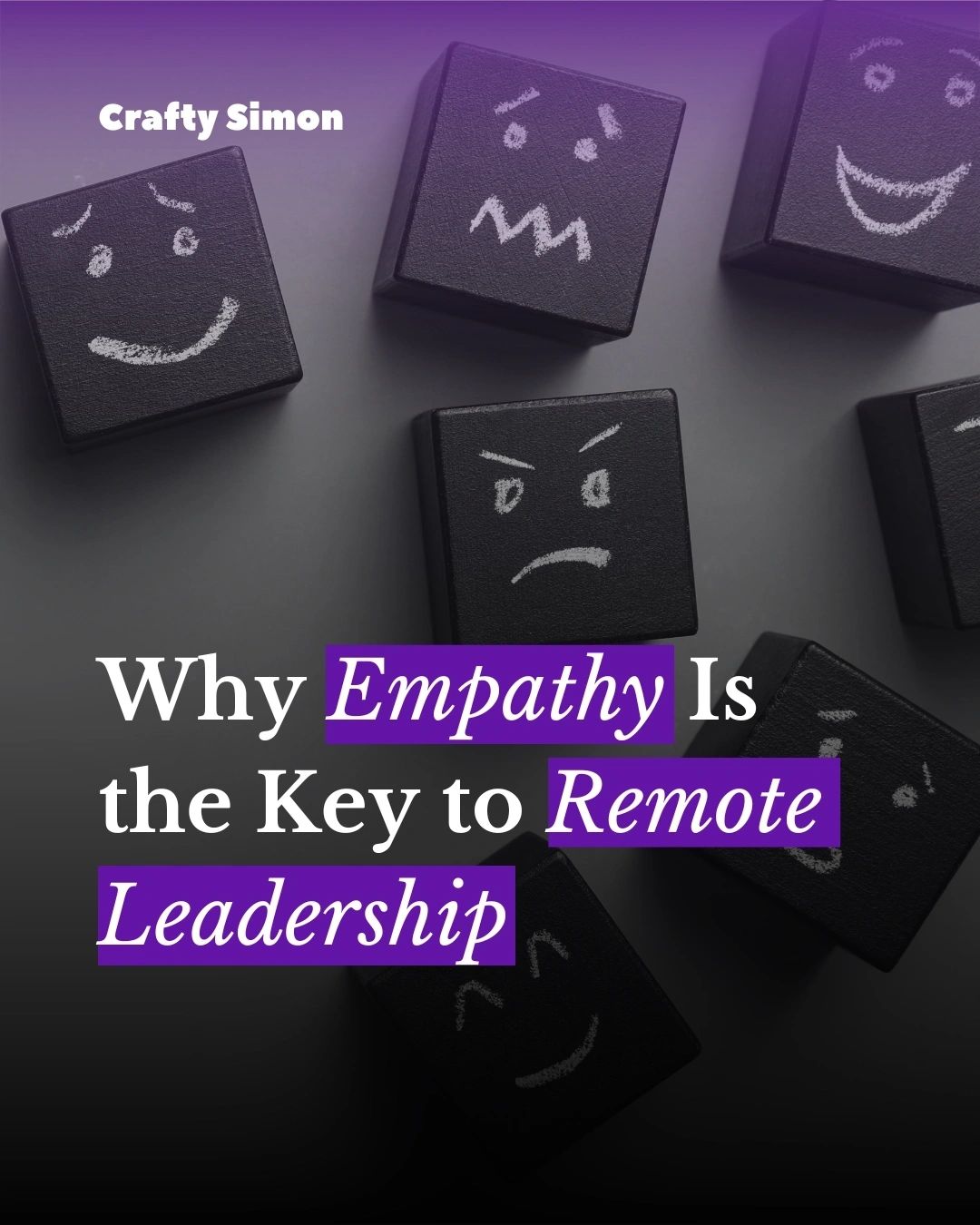
Discover why empathy is the foundation of effective remote leadership. Learn how understanding your team’s emotions, challenges, and motivations fosters productivity, trust, and stronger collaboration.

Introduction
In today’s fast-evolving digital workplace, leadership isn’t just about managing tasks — it’s about connecting with people. As more businesses in Australia and around the world shift towards remote and hybrid work models, one quality stands out as the defining trait of great leaders: empathy.
Empathy helps leaders bridge physical and emotional distances, build trust, and nurture an inclusive work culture where everyone feels valued. For companies that rely on remote teams — like many that partner with Crafty Simon Pty Ltd — empathy isn’t just a soft skill; it’s a strategic advantage.

The Role of Empathy in Remote Work
Leading remote teams can feel like navigating uncharted waters. Without face-to-face interactions, it’s easy for misunderstandings, isolation, or burnout to creep in. That’s where empathy in leadership becomes essential.
Empathetic leaders go beyond instructions. They listen actively, understand their team’s struggles, and respond thoughtfully. This human-centred approach builds employee trust, improves team engagement, and fosters a sense of belonging — even from afar.
When employees feel heard and supported, they’re more likely to stay motivated, take initiative, and perform at their best. And in the world of remote management, that’s a competitive edge worth cultivating.
1. Empathy Builds Trust and Transparency
Trust is the foundation of any successful team — but in remote environments, it doesn’t happen automatically. When communication happens through screens, leaders must be intentional about creating a sense of safety and reliability.
Showing empathy by checking in regularly, acknowledging emotions, and offering flexibility demonstrates that leaders value their team members as people, not just workers. It’s a simple act that nurtures psychological safety, which is essential for innovation and honest feedback.
When team members trust their leaders, they’re more open about challenges, quicker to collaborate, and less likely to experience burnout.
2. Emotional Intelligence Drives Better Communication
At the heart of remote leadership lies emotional intelligence — the ability to recognise and manage one’s own emotions and understand others’. In distributed teams, where tone can be lost in messages or emails, emotional awareness becomes even more important.
Empathetic leaders know how to read between the lines, notice changes in behaviour, and adapt their communication style accordingly. For example, if a team member seems disengaged, an emotionally intelligent leader might schedule a quick one-on-one to offer support.
Strong communication is not just about clarity; it’s about connection. That’s why leaders who practise empathy often see fewer conflicts and more collaboration across their remote workforce.

3. Empathy Strengthens Remote Team Culture
Culture isn’t built in offices — it’s built through relationships, consistency, and shared purpose. For remote teams, leaders must make an extra effort to foster belonging and connection.
Regular check-ins, virtual coffee sessions, or celebrating wins (big or small) can help teams stay connected. Encouraging open conversations about mental health or work-life balance also sends a powerful message: You matter.
Empathetic leadership transforms company culture into something far more meaningful than just policies and procedures. It creates a human-centred workplace that people are proud to be part of.
4. Empathy Boosts Productivity and Retention
Contrary to old beliefs, empathy doesn’t make leaders “soft.” It makes them smart. Research shows that teams led by empathetic leaders tend to be more productive and loyal.
By understanding individual needs, leaders can tailor workloads, recognise achievements, and provide meaningful feedback — all of which improve engagement and reduce turnover.
When remote employees feel appreciated, they’re not just working for a pay cheque (paycheck → pay cheque); they’re working with purpose.
That’s why many successful Australian businesses invest in leadership development that emphasises empathy, communication, and adaptability — the traits that drive long-term success.

5. Empathy Encourages Innovation
Empathy fuels creativity because it allows leaders to see from different perspectives. When people feel psychologically safe, they’re more willing to share ideas, challenge assumptions, and experiment.
In a remote working environment, where collaboration happens through virtual platforms, creating that sense of safety and inclusion is crucial. Empathetic leaders invite input, respect diversity, and show appreciation for each contribution — no matter where the person is located.
This approach not only leads to better teamwork but also drives business growth through innovation and fresh thinking.
How Leaders Can Cultivate Empathy
Empathy isn’t something you either have or don’t — it can be developed. Here are a few ways leaders can strengthen their empathetic approach:
- Active Listening – Pay attention to tone, pauses, and emotions. Listen to understand, not just to respond.
- Regular Check-ins – Make time for casual chats, not just project updates.
- Cultural Awareness – Recognise that remote teams often include people from different backgrounds and time zones.
- Lead by Example – Show vulnerability and authenticity. When leaders are open, teams follow suit.
- Encourage Feedback – Create a feedback-friendly culture where people can share concerns without fear.
[ ](https://Empathy in Remote Leadership: A Business Imperative)
Empathy in Remote Leadership: A Business Imperative
Empathy isn’t just a leadership style — it’s a business strategy. In a world where remote work is here to stay, companies that prioritise empathy will attract and retain the best talent, foster innovation, and thrive in uncertainty.
At Crafty Simon Pty Ltd, we understand the challenges of managing distributed teams. That’s why we provide remote staffing solutions designed to help Australian businesses scale efficiently and sustainably — with empathy and people-first leadership at the core.
Empathy turns managers into mentors, colleagues into collaborators, and teams into communities. And that’s the real secret behind remote leadership success.
Conclusion
Empathy is no longer a “nice-to-have” trait — it’s the cornerstone of effective remote leadership. By leading with understanding, emotional intelligence, and compassion, leaders can build stronger connections, inspire loyalty, and drive meaningful results.
In a remote-first world, empathy isn’t just the key — it’s the whole door.